Welcome Message

Unus pro omnibus, omnes pro uno -- One for all, all for one

Welcome To Our Mutual Support Community Web Site
(Formerly Known As "The Intel Eliminati" - TIE)
Showing posts with label Intel Corp.. Show all posts

Saturday, August 22, 2020

Intel Corp. Executives
Shady or even Criminal Behavior

We have covered the massive age discrimination practices that resulted in forced retirements and massive layoffs of older Intel Corp. employees in 2015, 2016 and beyond. When I talk face-to-face with members of PDX-TIE.ORG or other ex-Intel employees (less frequently, due to COVID-19) I am surprised about their ignorance regarding the fact that the company is faced with so many very significant lawsuits due to various shady and perhaps criminal behavior of its senior executives and the board of directors.

From my own perspective, the 2015/2016 layoffs were the event that "broke the camel's back" and proliferated the seeds of corruption and mistrust between Intel Corp. Executive management and the remainder of employees workforce.

While the "Executive Class" at Intel Corporation looked at their bonuses and the stock market evaluation of the company as their main goal, they lost their "moral compass" to unproductive finger-pointing, coverup and greed. Make no mistake, technological challenges always abound in the engineering world. This is why people who pursue engineering as a career, typically belong to "problem Solver" personality class. The main challenge for true engineers (not "engineers" in title or even by university degree) is to get their managers to overcome their "risk aversion" and "cover your ass" attitude. Technology may be challenged by rules of physics; however, management and particularly Executive Management is challenged by human behavioral factors that are essentially all "man-made".

The old "Intel Culture" defined the path for coexistence between both "risk taking" (as in venturing to achieve extremely high goals) and "risk management" (challenging the validity of ideas based on data or provable facts through the "constructive confrontation", rules of debate). These principles were the core values of the company and enabled its workforce to great achievements, through "thick and thin", while facing both technological challenges as well as tough competition in the Semiconductor market segment.

The great principles of "Intel Culture" were eroded, slowly but surely, over a long period of time,after Andrew Grove was replaced as CEO of the company by a series of successors.

The worst Intel Corp. CEO without a doubt was Brian Krzanich (BK), who did not only violate the basic principles of "Intel Culture", but actually made a great effort to overrule and wipe it out in his zeal to receive his Executive Bonuses. It is ironic that BK was forced to resign his post as CEO, due to blatant violation of the the Employee Handbook--the same operational handbook that spelled the rules of "Intel Culture".(see: https://www.pdx-tie.org/2018/06/mf-intel-ceo-resignation-raises-more.html)

The major side effect of getting rid of experienced (and older) employees, who grew up on principles known as "Intel Culture" (attributed to ex-CEO Andrew Grove), was the erosion of the company founders values. "Intel Culture" promoted transparency and discipline from employees at all levels, including the Executives level of offices up to the CEO level.

The sudden disappearance (due to forced "early retirement" and massive layoffs) of older employees (who themselves grew up on "Intel Culture"), left  the younger generations of Intel Corp. employees, who replaced the "old timers", having to learn their way around the various company operations, on their own.

The Intel Corp. Executive Class was so detached from reality that they believed in younger replacement employees' ability to ramp-up on-their own, without the benefit of experienced employees, being around to consult and guide the newcomers (in Intel speak the "NEOs"). Apparently, these executives believed that product design engineers and Fab workers can perform their job by watching YouTube videos and sharing messages through Twitter or Facebook.


Over the last five years, we have seen plenty of evidence to the aftermath that was left following the 2015/2016 layoffs, as the "transparency" "Open Door" "problem ownership" and "constructive confrontation" elements of Grove's "Intel Culture" were replaced by coverup and severe suppression of facts, in addition to the fabrication of "fake news, public relations campaigns" designed to keep both company employees and stock holders, at bay.

Unfortunately, there are too many similarities of Executive Class behaviors in corporate America that are created by people whose self-interest and greed, end up working against the company's long-term interests as well as the company employees best interests.

The Boeing B737MAX program fiasco, has so many parallels to the Intel story, in terms of Corporate Executives forcing their way on their underlings by decree and without listening to employees feedback. Between the Boeing case and the Intel Corp. case there is only one exception: thus far (as far as we know) Intel Corp. actions did not result in the loss of human lives.

Currently, there are  a number of legal processes undergoing against Intel Corp., which allegedly, involve anything, from mismanagement of the old employee pension fund (that was in effect until 2009), to long-term coverup of functional "bugs" that are "featured" into the Intel chips "Architecture", to making false statement to stock holders and potential stock holders of INTC equities.

The most significant decision of the Supreme Court of the United States (SCOTUS) to allow the law suite against Intel Corp. "old pension fund", originally filed in 2015 by former Intel engineer Christopher Sulyma, to proceed without delays. This should be the talk of the day. For some reason, this law suit is not getting much attention in the press.
 
Since the Sulyma Employee Retirement Income Security Act (ERISA) legal case reached the SCOTUS level of jurisdiction, it is easy to understand that Intel Corp. legal defense strategy is and has always been, based on eroding the resolve of individual plaintiffs, by resorting to legal maneuvering, stalling, and outright lying.

I believe that every current or ex-employee of Intel Corporation, as well as current or past investors of INTC shares, should follow-up on these articles:

Wednesday, July 15, 2020

For The Last Five Years
They Continue to Wish We Were Dead

Today, July 15th, 2020 marks the fifth anniversary date for the first Intel Corp. massive layoff of the 21st century. 2015 also represents the year in which Intel Corp. lost its leadership position within the semiconductor industry, due to a continuous wave of operational flops and process-engineering disasters, most of them due to bad management decisions and a rising wave of mistrust between management and employees.
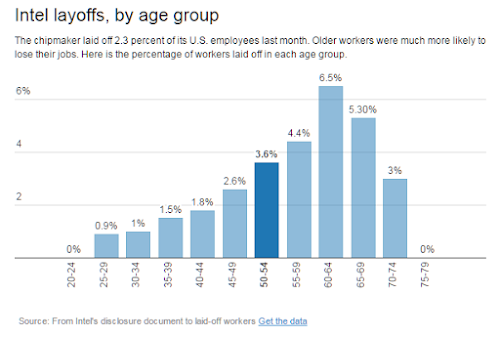
Intel Corp. 2015 Layoff Action
 Age Composition of Affected Employees

Intel Corp. management, under the leadership of CEO Brian Krzanich (BK) focused on lowering the cost of labor by laying off thousands of veteran employees, instead of fixing organizational and technological issues that plagued the company for many years. The company was unable to fix its high volume manufacturing (HVM) problems for chips manufactured in 14nm for longer than five years. The follow-up 10nm production line never matured into commercial viability. This type of phenomenon never happened at Intel Corp. at anytime in the past. Having the benefit of hindsight today, this colossal inability to deliver reliable silicon products, can clearly be attributed to the scarcity of technical and organizational leadership among the remainder of the company engineering workforce, following the 2015 and 2016 massive layoffs. 
 
Laying off more than 16,000 employees, many of them in senior grades with decades of experience under belt, was a very costly business move. Intel Corp. replaced experienced employees with much cheaper and inexperienced workforce. Company executives apparently had a notion that their veteran workforce was nothing but an easily replaceable commodity. The immediate result of the mindless mass layoffs created bad employee morale, lack of trust, led to operational chaos and penalized the company with enormous lack of productivity--a great deal of which still persists inside the company to this day.
 
In spite of external criticism of his actions, CEO Brian Krzanich continued to prove his leadership incompetence for a few more years of spiraling chaos, during which Intel Corp. lost its credibility as well as its world leadership position as a result of the company's inability to deliver on its promises to its customer base.  
 
Fighting the sinking reality of the semiconductor market slipping away, year after year, Intel Corp. expensive PR campaign to save face, met its eventual limits. Due to ever repeating lack of meaningful operational results, Intel Corp. Board took action and fired BK in June 2018.
 
To protect INTC stock value, the Board explained the firing of BK with a "Roger Stone style story" utilizing a sexy connotation that was meant to distract public attention from the incompetence of Intel Corp. C-Suite as well as the incompetence of the company Board of Directors itself.
 
Apparently egomania and greed can never be satisfied. Even after leaving his CEO position with the company, Krazanich himself is under SEC investigation for insider trading of Intel stock. Regrettably, as we have witnessed over the last decades, how U.S. Government agencies seem to operate more like "paper tigers" than "Rambo". Rich executives can continue to live the high life as long as they keep paying their "high shelf" high hourly rate lawyers.

Ex-Intel CEO Lists Lavish Silicon Valley Compound

Intel Corp. worst legacy is still lying ahead. In its hasty effort to restructure its workforce the company laid off thousands of older workers, as well as forced many more thousands of senior employees to retire under duress. By doing so, Intel Corp. management violated the civil rights of older workers ("older workers" defined as employees who are 40 year old or older). Such workers are classified by Federal regulations as a "protected class", which requires employers to take specific actions before laying them off.
 
Specific U.S. Employment Law rules and regulations were set in place to protect  employees aged 40+ from discriminatory practices. Most of such protection rules are defined in the Age Discrimination in Employment Act of 1967, otherwise known as the ADEA.
 
Although employers are allowed to lay off older employees, the ADEA specifically requires employers to follow employment practices meant to guarantee that older employees are not to be discriminated against during the whole course of their employment as well as during the hiring and/or firing process.
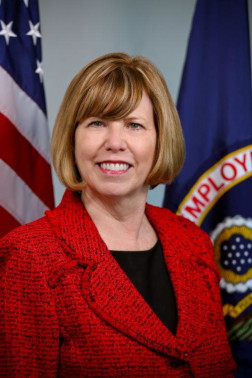
dhillon_scaled
Janet Dhillon - EEOC Chair

Members of PDX-TIE.ORG filed and brought forward substantial evidence that Intel Corp. knowingly violated the ADEA in many ways, during the course of Mr. Brian Krzanich rein as Intel Corp. CEO. Charges written by members of our organization (PDX-TIE.ORG), submitted and filed with the Federal government Equal Employment Opportunity Commission (EEOC) in 2016 are in full progress of investigations.
 
We recently received yet another confirmation that the EEO investigation is still in "active" state. It is already more than 4-1/2 years since our charges have been filed and the clock keeps ticking on the Federal investigation. Amazingly, Janet Dhillon, the Chair of the EEOC, appointed by President Donald Trump in May 2019, testified under oath in a hearing in front of congress:

It is the sad reality that too often, justice delayed is justice denied. Evidence can be  misplaced, and memories fade with the passage of time. The opportunity to quickly stop and remedy a discriminatory practice can also be lost – potentially to the detriment of other impacted employees. To ensure quality service, it is critical that private sector charges and federal complaints are handled promptly and fairly – and so we must work to reduce backlogs across all program offices.

Shall we take her for her word? Do words stated under oath inside the halls of the U.S. Congress, have a meaning if not translated into enforcement actions?

One of the advertised policies of the EEOC over the last few years was "working with employers", namely convince employers to police themselves, in matters associated with employees age discrimination in the workplace. In the words of EEOC Chair she is driving the EEOC to pursue a "Litigation Last" policy namely, avoiding law enforcement, seemingly at all costs to the U.S. Government. This type of "soft talk, self policing" methodology has been exercised extensively, by another Federal agency, the FAA. The results of such actions (or lack thereof) turned out to disastrously manifest their outcome in the Boeing 737MAX fiasco.
 
The result of forfeiting external supervision on large corporations and "letting the dogs guard the hen house" cost the lives of hundreds of innocent people and at the same time pushed the Boeing company to the brink of bankruptcy. There are very serious lessons to be learned from this story. Lack of external supervision and dereliction of duty on the part of Government Oversight, unavoidably leads to a situation where everyone, corporations, clients, employers and employees turn to become big losers.

With the above being said and judging from the "snail's pace" at which justice for older employees affected by the Intel Corp. layoffs is being pursued, many of us may be dead already, before Intel Corp. is brought to justice by the Federal Government. Many of us are older and form the most vulnerable segment of the U.S. population at risk for COVID-19 severe infections and ultimately death.
 
Clearly, the political and the corporate echelons would rather wait and see us (the "problem" in their view) vanish into oblivion, as more of our members meet their demise. With no proactive actions on the part of the U.S. Congress, and with the EEOC forfeiting their law enforcement actions, dereliction of duty continues to rule the day.

Latest unemployment Trend Charts
(click on image to enlarge)


The latest unemployment data report clearly demonstrates that the U.S. is in the middle of a major economic trough, following the COVID-19 pandemic. Under the circumstances, it is very likely that many workers, particularly those aged 40 and older, will never return to their original jobs. This situation presents employers with the perfect opportunity to "weed out" their most expensive employees, which in most cases are the most senior and experienced, namely "older", replacing them with younger and certainly "cheaper" workers. Past experience demonstrates clearly that commercial corporations that view their workforce as "replaceable" commodity, tend to fail "big time", while business entities that treat their employees as an "asset" tend to flourish. Look at IBM, GE, and of course Intel Corp.

It is important to note that in most companies, older employees serve as de-facto mentors to younger and less experienced employees. The value of mentoring has been proven to be a major contributing factor to the success of business. Clearly, with proper management policies, a good balance of employee diversity is not only required by employment laws--it actually contributes to cohesion of the workforce and increased productivity.

Unfortunately and to detriment of many companies, for the average C-Suite executive, having mostly inexperienced workers onboard, does not seem be an issue of great concern. By the time that the business begins experiencing serial operational failures after getting rid of its experienced workers, the executives have already harvested their mega bonuses and pulled their "golden parachute" cords to pursue "new opportunities"...

Intel Corp. serves as a perfect example of a company that "lost its soul" due to getting rid of its "experienced" workforce, while rewarding its egocentric executives with fat monetary rewards. It may have taken five years to note the destructive effect of the 2015/2016 massive layoffs; however, it is now widely recognized that the "Intel Empire" is collapsing from the inside, due to so called "cultural" problems. (see: Intel’s Culture Needed Fixing. Its C.E.O. Is Shaking Things Up. Robert Swan, who leads the world’s biggest chip maker, is pushing his 110,000 employees to confront internal problems more openly).

During these days when the world is facing a major pandemic, it may be convenient to ignore problems that could have made headlines in the past. However, it is futile to deny the demographic trends in the U.S., which clearly show the working population is getting significantly older.

Workforce-age Group Composition
(click on image to enlarge)

OLD at 40 YEARS of Age?
 
Remember what we said earlier in this article about the ADEA defining older workers as those who are 40+ years of age? Well, if this fact eludes you for one reason or the other, Millennials, namely people who were born between 1980 and 2000 are in the process of entering this class of "older" workers. People who were born in 1980 are already 40 years old! Having the largest representation in the current workforce, Millennials have every reason to be concerned about age discrimination in the work place. Seeing your chances of keeping a well-paying job diminish as you cross the "magic 40" line, could be a nightmare come to life unless corporate greed, with its insatiable appetite for cheapening the cost of labor is met with effective enforcement of laws that have been written to serve the public, as opposed to serving the corporate world.


It is unnerving to think that the U.S. economy can continue to function by the rules of the corporate world with automation and major layoffs producing whopper bonuses to enrich the few individuals sitting in corporate C-Suite roles while denying the actual workers from the ability to maintain sustainable living wages. What are we going to do with people in the 40s, 50s, and 60s who can no longer find a decent-paying job? It is time to recognize that "older" is a relative term and that term applies to every single person throughout their lives. There is no cure for aging unless jumping from a tall bridge is your favorite hobby. One day the other guy is "old" and on the next day you are "the other guy".

Achieving equal rights for women is getting a new life in the political arena, particularly when it involves equal pay for equal labor.  However, very few proponents of women's rights acknowledge the fact that "older" women bear much harsher treatment from employers due to age discrimination, than men of similar age. The MeToo movement made remarkable progress to expose and (hopefully) curtail sexual harassment and discrimination in the workplace. Maybe it is time to up the ante, use the momentum and declare the birth of the "Me-Three" (Me-3.00) movement to fight rampant age discrimination for women.

It is an "open secret" that Corporate America is in charge of the country, at least for the last 40 years. We have the "best politicians that money can buy", regardless of their political party affiliation. The current political system is totally fueled by money, which it seems to guzzle at an alarmingly high rate.
 
Although we currently (2020) have a President who seems to continuously make the wrong choices and then cover up in order to save face, both houses of the U.S. Congress seem to be stuffed with people of similar ego maniacal core. Congress and the U.S Senate are stuffed to the gills with recycled politicians who obey the wills of their donors, as opposed to the wishes of their constituents.
 
This situation is hard to explain, since most voters do not identify with either the RNC or the DNC propaganda. Gallup polls conducted frequently over the last few years consistently indicate that there are many more "independent" voters than voters that identify themselves with either "R" or "D". The latest poll conducted during the first week of June indicates that independent voters amount to 40% of the voting population as opposed to 25% Republicans and 31% Democrats.
 
To the best of my visibility, most people are more motivated to vote "against" a particular political candidate than "for" an alternative candidate. With this type of voters' psychosis, it is no wonder that the whole country is falling apart at the seams and what unifies us as voters are our differences...


While disaffection with both of the major parties has been rampant, attempts at creating a significant third party that could act as a tie-breaker in both houses of Congress have not been successful thus far. The political system is essentially rigged by the current players to prevent newcomers from taking political power from the entrenched establishment. As much as I would like to see a large "Independent Party" taking place in U.S. politics, it is difficult to imagine that such a phenomenon would come to life, absent a major long-term crisis. While the COVID-19 pandemic could potentially extend into a full blown existential crisis, most of the American public still believes that full recovery is a matter of a year or two. Throughout history this type of apathetic shortsightedness has always been the "Achilles Heel" of the plebiscite.

In reality, elected politicians must be "supervised" on a continuous basis. The power of money, concentrated in Washington D.C. lobbying firms, can be defeated if the voting constituents regularly and continuously check their representatives' actions by looking at their day to day, actions and voting records. Congressional representatives ears must be be kept open through continuous stream of messages sent to them by their constituents. In the absence of meaningful communication from their constituents, Congressional Reps attention becomes captive to be grabbed by D.C. lobbyists who's time is well paid to deliver their master's messages.

Calling politicians' bluffs does not need to wait for the next elections cycle. The Internet provides access to most Congressional records and it is too bad that most people do not care to read these records to enlighten themselves.
 
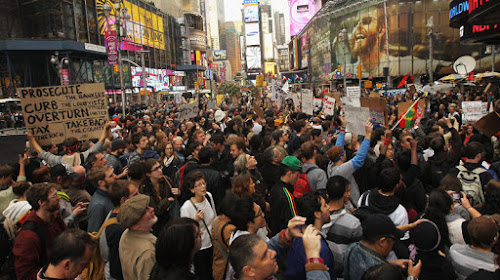
We all carry responsibility to manage our Reps, since otherwise, the money'ed interests in D.C. remain the only entities that interact with them. While big demonstrations in the streets have a significant "splash factor", such events tend to fizzle quite quickly. Generally, politicians have short attention span. In the absence of continuous follow-up on the cause, our politicians will not change their behavior, since most of them depend on money to retain their seat and the money supply is still concentrated in the hands of the "one-percenters" and the big corporate interests.

Take charge and call on your elected representative today! Tell them what you really care about.

Stay healthy and all the best!

--Dr. Flywheel

References:


Thursday, December 12, 2019

Intel Corp. - Is That “Mea Culpa”?

Mea culpa is a Latin phrase that means "through my fault" and is an acknowledgement of having done wrong. 
 (source: Wikipedia)

It is not unusual for criminals caught in the act by law enforcement to plead guilty to a lesser charge in order to cut a deal that (they hope) will reduce the impact of their sentencing. Usually such “deals” are cut during the period of time when an active investigation by law enforcement is taking place and prior to public filing of the official charges in court.


It is no surprise at all that Intel Corp. decided to expose their EEO-1 data for the years 2017-2018 to public view, attempting to create the impression of being a “cooperative good citizen”. See: Intel 2017-2018 EEO-1 Report


Interestingly, Intel Corp. own official published report demonstrates staggering lack of equality or diversity within the company’s workforce composition. Check out this Bloomberg article for a summary of the Intel Corp. EEO-1 reports data: Intel Is First to Share Detailed Pay Disparities. It’s Not Flattering...


The Bloomberg article notes:
Among 52 top executives at Intel, who all earn more than $208,000—the top pay band the EEOC tracks—29 are white men, 11 are Asian men and 8 are white women. The remaining tally is 1 each for Asian women, Hispanic women, black women and black men, with no Hispanic men among executives in that top tier.


The same article goes to say:
The ratio was similarly skewed across manager, professional and technician job classifications, with white and Asian men dominating top pay groups and women and people of color clustered in the lower bands. One in four white men at Intel are in the top salary tier, earning at least $208,000, a higher share than any other group. Rates are far lower for women and underrepresented minorities; less than 10% of black employees are top earners.

The immediate questions that come to mind are:
  1. What drives Intel Corp. to expose to the public, information that it must report only to the EEOC, and why right now?
  2. What is the overwhelming factor that drives Intel Corp. to seemingly admit to fault in public?
The timing question could be explained by the fact that details about the EEOC investigations of Intel Corp. age discrimination practices indicate the investigation is coming to a head. Interestingly, Intel Corp. public exposure of their EEO-1 reports, came out only two days after Mike Rogoway of the Oregonian news outlet published an article in the Sunday edition of the paper entitled: Age discrimination: Intel investigation drags on for years, worker protections lag. In his article, Rogoway spells quite clearly that the multi-year investigation of rampant employee age discrimination practices exercised by Intel Corp. is in full force.

Under the latest circumstances, it is clear that Intel Corp. exposure of its blatant lack of diversity is not happening in vacuum. It is well known by now that the company is undergoing federal investigation by the Equal Employment Opportunity Commission (EEOC) for gross violations of federal employment laws, more specifically, for massive age discrimination targeting a large number of its older employees. Since the company laid off more than 17,000 employees over the last four years, mostly during 2015 and 2016, and since many of these employees were not women or minorities, Intel Corp. pretends that laying off older employees was done to balance the lopsided composition of its workforce. In reality, the EEO-1 reports show very little change and a clear discrimination of women and minorities compensation basis. It is interesting to note that the EEO-1 reports do not require data aggregation on the basis of age, while they do include gender and minority attributes. It is likely that aggregation by age and year-to-year comparison of the reports would have revealed a clear trend of replacing older employees with younger employees. On the other hand, when the EEOC investigates the company, they can find the age aggregation numbers if they wish to do so. I will be surprised if the investigators did not collect this information.

When examining Intel Corp. seemingly “unusual” action of exposing the EEO-1 aggregated reports for 2017-2018, we must consider two important points:

  1. The type of violations reflected through the EEO-1 reports carry hardly any legal liability for the company and can be relatively easily deflected as “unfortunate” and non-intentional by the company defense attorneys.
  2. Unlike the violations exposed through the EEO-1 reports, Intel Corp. exercising massive age discrimination violations in the employee layoff cycles of 2015 and 2016, do confer significant legal liability and represent potential heavy financial cost to the company, once taken to court.
The results of the active EEOC age discrimination investigation have not been published yet, so it makes sense that potential charges officially filed against Intel Corp. by the EEOC will be far more severe than what the company is willing to admit to publicly. Under these circumstances, it can be understood that Intel Corp., portraying itself to be a cooperative “good citizen” by declaring “mea culpa” to lesser charges, is making a bet to lessen the public opinion impact (and perhaps also the court sentencing) associated with the company’s blatantly illegal practices.

On this website, we reported that in 2015, Intel Corp. deliberately (and criminally) marked the personnel records of more than a thousand employees as “thieves”. They took this radical step to simply block the possibility of any one of these laid off employees from being rehired. See: Intel Corp. Marked Employees as Thieves to Prevent Their Rehiring.


We also reported that Intel Corp. deployed armed guards to coerce employees who were laid off in 2016 to sign documents, relinquishing their rights for legal recourse against their employer. See: Armed Guards Were Used to Coerce Laid-off Intel Corp. Employees in 2016


Note that all the information that we reported was volunteered by Intel Corp. employees and ex-employees who held key positions at the company over the course of several years and had access to inside information at the relevant time. The EEOC was presented with this information in a timely manner and their investigators were invited to interview our witnesses during the course of their ongoing investigation.


Unfortunately, there is a growing trend over the last two decades for our government agencies to bail out of their oversight and inspection responsibilities and let large companies regulate and audit themselves. Relying on “
foxes to guard the hen-house” may work very well to advance the interests of “big business”; however, such dereliction of duty on the part of government agencies does not serve the interests of the citizenry.

Typically, large companies can get by and continue to behave badly with lack of external supervision, until something bad happens and the “shit hits the fan”

A case in point is the recently exposed failure of the FAA to supervise the qualification of the Boeing 737-MAX airplane. Self-policing of the B737-MAX airworthiness qualification saved Boeing a lot of money and allowed the company to shorten time to market for their product. However, it took the tragic loss of many lives to expose the systematic distortions and criminal neglect that was exercised in the process of self-policing.


Both the FAA and EEOC are U.S. Government agencies that operate with a great deal of autonomy and have a clear mandate to serve the American People and not the corporations. When such agencies get caught “sleeping at the helm” and letting the “
fox guard the hen-house”, the U.S. Congress must forcefully intervene to correct the behavior of the agencies, before a major disaster happens.

Though no smoldering wreckage and charred bodies can be shown on TV, systemic exclusion of older workers from the American workforce through massive layoffs and almost non-existent law enforcement against age discrimination, is an extremely destructive practice. We are going to witness the long-term economic ill effects of such discrimination in the coming years and the cumulative damages are far-reaching and even fatal to the millions of people affected by premature forced retirement and long-term unemployment.


Additional References:

Saturday, July 13, 2019

Armed Guards Were Used to Coerce Laid-off
Intel Corp. Employees in 2016

Forcing employees to quit on their own or in some cases, take forced retirement under terms, unilaterally dictated to benefit the corporation, seems to be standard practice in the corporate world. 

PDX-TIE.ORG interviewed a number of people who testified that uniformed armed guards hired by Intel Corp. management, were in full view, as part of a psychological move by the company to coerce laid off employees to sign the separation agreement that was laid on the table in front of them, during the 2016 major employee layoff period.


According to these witnesses, employees were, unexpectedly called, one-by-one, to a room where they were notified that their employment with Intel Corp. is terminated immediately. Most people were immediately stripped off of their company ID badge and their laptops were confiscated during the same session. Following the termination statement subject employees were given an explicit choice to either get out of the door with minimal severance pay or sign the severance agreement that was laid out on the table in front of them. Some witnesses, claimed that they were so shocked by the circumstances and particularly by the full view of armed guards in the vicinity of the "execution" rooms that they felt like hostages and actually experienced a "Stockholm Syndrome".

Many laid-off employees claimed, after the fact, that they signed the separation agreement without being able to comprehend the document content in sound mind, due to the psychological pressure that they experienced during the reign of Brian Krzanich as CEO of Intel Corp. Some ex-employees claim that the presence of armed guards a few feet away from them, during the firing session, in addition to the psychological shock of suddenly losing their job, drove them into deep personal depression and continued insecurity for a long time, after their last day of employment.

Apparently psychological coercion of employees is a common method used by corporations to get rid of employees with minimal backlash to corporate management. A recent court trial in France, involving Orange S.A. (formerly French Telecom) reveals that corporate management came up with an "innovative way" to reduce their workforce while minimizing public backlash to the company due to major layoffs. As Fortune Magazine reports:

In 2008 and 2009, dozens of employees of France Telecom took their own lives or attempted suicide amid a massive restructuring at the company. A 52-year-old technician who killed himself in July 2009 described the situation as “management by terror” in his suicide note. Starting this week, six former executives, one current exec, and the company itself—now known as Orange SA (ORAN)—are in court to face a devastating question: What role did they play in 35 employee suicides?

In a previous article we discussed the manner in which Intel Corp., under the leadership of Brian Krzanich as CEO, marked the personnel files of about 1300 laid-off employees as THIEVES, in order to prevent them from being rehired by the company for the rest of their lifetime. We know that Intel Corp. has chosen to mark such a large group of employees as THIEVES for nefarious reason that served the narrow interests of the CEO, the Board and a few company executives. We do not contest the right of companies to lay off their employees within the boundaries of the law and for sound business reasons. However, when the official records of the 2015 and 2016 layoff rounds clearly demonstrated disproportionate age-based discrimination, we expect the Federal and State governments to step in vigorously and enforce the relevant workers civil rights laws.

With the additional recent revelations regarding the coercive tactics that Intel Corp. executives used to implement the layoffs, including the threatening deployment of armed guards and marking personnel files with false information in order to block people from being rehired by the company, the American Public must pay close attention to the severe deterioration in corporate behavior.

The question remains, how long can corporations continue to use dubious unethical tactics to serve the narrow interests of a few executives and in addition, continue practicing age-discrimination at large, without any penalties imposed upon such behavior.

Blocking the rehiring of former employees by a company represents a practice that is completely incompatible with the  "Equal Employment Opportunity" laws of the U.S. This practice is particularly insidious when such employees are labeled as THIEVES, without proven legal cause.

It is the responsibility of the Equal Employment Opportunity Commission (EEOC) to take corporate systemic violations of this kind very seriously. They must prosecute law violators to the utmost degree possible, before tragic and violent circumstances, like the ones associated with the France Telecom case become news of the day in the U.S.

--Dr. Flywheel

References:

  1. Intel Corp. Marked Employees as Thieves to Prevent Their Rehiring
  2. France Asks a Devastating Question: What Role Did Telecom Executives Play in 35 Employee Suicides?
  3. France Telecom suicides: Prosecutor calls for bullying trial
  4. Stockholm syndrome

Wednesday, June 12, 2019

Intel Corp. Marked Employees as Thieves
to Prevent Their Rehiring

Back in July 2015 Intel Corp. laid off about 1300 employees. Information gathered from the Federal Government mandated OWBPA Report, associated with this layoff, revealed that employees over 40 years of age were targeted for this layoff in a disproportionate way. At the time of the layoff the OregonLive web site produced an analysis demonstrating this fact, as shown in the chart below.

(click on image to enlarge detail)


However, under the discretion of Brian Krzanich, Intel CEO at the time, the HR department was directed to prevent any possibility of Intel Corp. managers, rehiring any of the 1300 laid off employees. Consequently, the employee records of each one of the laid-off employees, in the HR database were marked with a special code, declaring them as THIEVES.

By marking an employee record with the THIEVE code, a warning would be issued through the Intel Corp. HR database system, to any hiring manager who would examine the eligibility of an ex-employee to be re-hired. This warning would block the potential re-employment of such person, permanently. Note that the rehiring ban applied to all categories of employment: Regular Employee (Blue Badge), Contract Employee (Green Badge), Full Time, or Part Time.

We were able to interview a number of people who worked, at the relevant time, in various capacities at Intel Corp. HR and other departments. These witnesses confirmed to us that all 1300 laid-off employee records were marked with the special THIEF code, within the company's Employee Data Archive database.

Note that Intel Corp. is the largest payroll employer in Oregon and a major employer in several other states. By marking laid-off employees as THIEVES, Intel Corp. essentially wiped out a potential source of income for a significant number of people. This capricious corporate edict would persist for the rest of these affected ex-employees lifetime, unless Intel Corp. is brought to justice and the policy is consequently, reversed.

There is an open question whether a company can be disparaging a group of laid-off employees as THIEVES and get by without legal scrutiny. Clearly, such behavior is discriminatory action all by itself and a strong argument can be made that such action is intentional and criminal in nature.

We are hereby calling upon the U.S. Government, the State of Oregon Government, our U.S. Congressional delegation, the EEOC and the Federal Bureau of Investigation to inspect and seriously review the relevant Intel Corp. Employee Records and databases in order to investigate the facts stated above.

--Dr. Flywheel

Update July 13, 2019

We interviewed a number of people who testified that uniformed armed guards hired by Intel Corp. management, were in full view, as part of a psychological move by the company to coerce laid off employees to sign the separation agreement that was laid of in front of them, on the spot.

Apparently psychological coercion of employees is a common method used by corporations to get rid of employees with minimal backlash to corporate management. A recent court trial in France, involving Orange S.A. (formerly French Telecom) reveals that corporate management came up with an "innovative way" to reduce their workforce while minimizing public backlash to the company due to major layoffs. As Fortune Magazine reports:

In 2008 and 2009, dozens of employees of France Telecom took their own lives or attempted suicide amid a massive restructuring at the company. A 52-year-old technician who killed himself in July 2009 described the situation as “management by terror” in his suicide note. Starting this week, six former executives, one current exec, and the company itself—now known as Orange SA (ORAN)—are in court to face a devastating question: What role did they play in 35 employee suicides?

See reference #5 in the notes below.

Notes:
  1. Can you sue an Oregon employer for defamation based on a reference?
  2. If my boss recorded false statements in my personnel file, is this libel?

  3.  Flawed Separation Agreement Does Not Bar ADEA Claims :
    Every separation agreement for an employee who is age 40 or older should include an ADEA waiver and the protections required by the OWBPA. Failure to include these provisions does not necessarily make the entire agreement invalid or create a separate legal claim, but the employee will have the ability to proceed with ADEA claims against the employer despite the payment he or she has received.
  4. Wells Fargo Faces Scrutiny for Black Marks on Ex-Employee Files
  5. France Asks a Devastating Question: What Role Did Telecom Executives Play in 35 Employee Suicides?

Tuesday, October 23, 2018

Intel Corp.
The “Headless Chicken” Syndrome


We have a good reason to believe that Brian Krzanich (BK) resignation from Intel Corp. was a “Roger Stone” style diversionary PR stunt, chosen by the Intel Board of Directors to protect the stock price from negative effect of vacating the top executive position. While supposedly, BK resigned his position as CEO due to ethical violation of company rules, in reality, BK was responsible for significant blunders that kept sinking the company position as a leader of the semiconductor manufacturing business.

The fact that Intel has not filled the CEO position since June 2018, indicates one or more of these points:
  1. No reasonable candidate is willing stick their head in the mess that is left behind BK’s legacy.
  2. The Board of Directors is complicit in letting BK run the company unchecked for such a long time and any well qualified candidate who interviewed with the board, figured out that they will be working against the tide and without backup.
  3. The Board of Directors is aware that CEO replacement will not solve the problems that Intel Corp. is facing, because the problems are much more profound and involve general lack of trust within the organization. Consequently, they are only focusing on damage control and can live with an interim CEO who is “absolved” of long-term responsibilities.
  4. The U.S. economy is currently running in full swing. The Board of Directors is focusing on “making hay while the Sun is shining”. A new CEO, particularly one who comes from the “outside” may come up with demands for radical changes to the internal organizations and consequently put the current stock price at risk. It is likely that the Board prefers to maintain the status quo over any "revolutionary" actions.


Brian Krazanich replaced the late Paul Otellini as Intel Corp. CEO in May 2013. Although presenting himself as an “engineer” in practice, BK had a very short engineering experience and very quickly, after being hired as a “process engineer” (a manufacturing position) at the New Mexico Fab, he shifted to a management track, where the rest of his career at Intel Corp. was spent. Most of BK career growth took place as a manager at the Technology and Manufacturing Group (TMG), which operates the silicon manufacturing lines (known as the "Fabs"). BK had no background in circuit design, electrical engineering, systems engineering, or software engineering which together, create the actual IP value of today's computer systems products.

For many decades since its foundation, Intel Corp. held itself to high standards of transparency by keeping low overhead and sharing information with all of its employees. As part of this exercise of transparency, the company annually conducted an employee feedback study known as the Organization Health Survey (OHS). The OHS presented employees with a large number of questions, asking them to grade the company performance over a wide range of issues. The OHS goal was to give managers a realistic assessment of the efficacy of management practices. The results of the OHS were published and distributed to employees, as a matter of course, followed by a public discussion of the issues exposed by the annual OHS. As the late Paul Otellini used to say "OHS goal is to keep Intel Corp. management in tune with company employees".

In 2013 (the first year in which BK was the CEO), Intel Corp. "C-Suite" issued a message to employees that the pending, annual OHS will not be conducted for that year. This was supposedly, because BK was in his position for less than a full year. This was the first time that the OHS was not run, since inception of the practice at Intel Corp.

In 2014, though the OHS questioner was distributed to employees on time, executive management refused to publish the OHS results for the first time in the history of the company. The only points that were exposed, came out of the personal blog that Richard Taylor (head of Intel HR at at the time) published on Planet Blue, the internal employee social network. The major issues mentioned on that blog included the fact that the OHS revealed significant trust issues among corporate entities, as well as lack of trust between managers and technical leaders, serving within the same business units.

Since Richard Taylor’s blog was open to all employees, his comments about the OHS received a flood of comments and questions. Like other company employees, I contributed a few of these comments at the time. My comments specifically addressed the growing lack of knowledge and many times complete ignorance of significant technical issues on the part of company managers at all levels. I also mentioned the systemic diminishing of the authority bestowed upon technical leaders and the overt effort to cut their numbers in company ranks, while staffing a growing number of manager positions. At the time, we did not know that BK and his cronies were planning to lay off a large number of employees in 2015; however, in retrospective, it becomes clear that the ground work was already set for this action to happen.

Interestingly, the 2015 mass layoffs were heavily skewed to exclude managers, compared to employees in individual contributor positions. This fact is clearly demonstrated by the OWBPA report filed by Intel Corp. in June of 2015.

(click on image to expand detail)


2014 was the year in which during the course of my work as the systems architect of the Electrical Validation department, I had first row view of the 14nm process yield failures. Upon closer look and a thorough investigation I came to the conclusion that the systems used for engineering audit of the wafers coming out of the Fabs were ineffective for determining a cause-effect correlation. Establishing such correlation is a fundamental requirement for effective failure analysis and subsequent correction of mass manufacturing production flaws. While 20th Century methodologies were sufficient to monitor silicon defects and determine corrective actions for fixing silicon production flaws for many generations of Intel silicon products, it became apparent that these methods have reach their limit at the time that the last 22nm fabrication process (Haswell family of CPUs) was used at the Fabs.

Looking at the vast amounts of data coming out of the production monitoring systems, I was astonished to find out that no-one on the engineering side of the company, knew how to effectively use the collected data for proper analysis as well as how to apply the analysis towards fixing outstanding yield problems. Further, it was shocking to find out that most of the petabytes (millions of gigabytes) of data was never seriously examined or utilized. In fact, most of the collected data was  unfit and useless for engineering analysis. After years of inertia this revelation was the first indication of a systemic failure. A Laissez-faire approach to running a critical part of the business suddenly falling into obsolescence, mostly due to lack of scrutiny and common sense among managers.

In an effort to correct the situation I began working on an initiative to revise the procedures and the methodologies used for identification of root-causes in silicon wafer failures for the 14nm and the upcoming 10nm fabrication processes. In concerted cooperation with other engineering leaders I devised 21st Century methodology, specifically using “big data” and artificial intelligence techniques for collection, organization, and analysis of silicon wafer failure handling. The foundation for this framework became internally known as the INTELligence Initiative.

While it took a significant amount of time to educate and convince people that the methodology change is critical for success, a significant number of technical leaders within the engineering organizations at Intel Corp. became convinced that the new direction that I proposed is the right way to go. Further prototyping and application of the methodology were applied to real-life data demonstrating significant success. The only objections, came from high level managers, who had no technical background and were risk averse. The message that I received at the time was “go ahead and implement your solution, if you are successful, we will support you...”.

The INTELligence Initiative and all the process improvements that I was leading at the time, went on the chopping block after the 2015 mass layoffs. C-Suite executives enjoyed their bonuses at the end of 2015 and the orchestra continued to play while the boat was sinking.

Though my immersion in the analysis of the 14nm production problems allowed me to understand the depth of trouble that hat the company was in, I was still convinced that commonsense would prevail and the new methodology would be adopted to help the recovery process. Now, four years later, I see that the common sense never floated to the top, because the Intel Corp. organization became increasingly dysfunctional, year after year.

It is now the end of 2018, BK is no longer the CEO, many thousands of experienced Intel Corp. employees had been permanently laid off in 2015 and 2016 and most of them do not wish to ever return to employment with Intel Crop.

Let us do a reality check as of end of October 2018:
  • BK received the dubious credential of being the “First Intel Corp. CEO to Break Moore’s Law”, an attribute that he certainly worked hard to earn...
  • BK appointed more Vice Presidents during his tenure as CEO, than any one of his predecessors. The question remains open: "What does the company have to show for this generosity?"
  • Intel Corp. has trouble finding competent people who are willing to work for the company, due to its diminished reputation as a fair employer.
  • The employee trust issues that were revealed in the 2014 OHS have never been attended to and the employee scare tactics, subsequently employed by BK for more than four years, further eroded chances of repair.
  • Intel Corp. sustained tremendous production yield problems with its 14nm silicon production processes while other semiconductor manufacturers, including Global Foundries, TSMC and Samsung proceed to offer reliable 14nm, 12nm 10nm and 7nm products.
  • Intel lost its place as the number one semiconductor manufacturer in the world, more than likely, forever.
  • AMD business success due to its reliance on external Fabs is capitalizing on Intel Corp. failure to lead in manufacturing technologies and product intellectual property development.
  • While still fighting yield problems with the so called “mature” 14nm process current industry news give the impression that the 10nm silicon manufacturing process will never see the light of day, due to both technical and economical factors.
  • Apparently the pressure on the limping 14nm production process is so bad that Intel Corp. is moving the system integration “Chip-set” parts back into the older 22nm production line.
  • Intel Corp. began selling assets, to offset losses. The latest such action is apparently, the sell off of the memory business, back to Micron Technology, for $1.5 billion
My analysis is that Intel Corp. is facing a plethora of technical problems that are real. However, the overwhelming problem for the company is the presence of incompetent management at all levels, in addition to lack of trust and cooperation inside business units and absence of leadership direction. The current production yield problems are only a symptom of the underlying organizational weakness and lack of leadership resolve. I define this phenomenon as the “headless chicken syndrome”.


--Dr. Flywheel


Friday, June 22, 2018

MF Intel CEO Resignation Raises More Questions

Recent news regarding about Intel Corp. CEO Brian Krzanich informed the public that BK resigned from his position, voluntarily. In view of of the company's record while under the tenure of BK, we believe that this "surprise" resignation was due to multiple factors and was a lot more predictable than not. The "fraternization" charges seem to be a PR solution that was devised to cover up for much more material misdeeds on the part of the beleaguered CEO.The swift way in which the event was announced and executed, indicates that Intel Corp. is doing its best to put maximum distance between BK and the company, more than likely because more serious revelation are about to see the light of day, very soon.
  • So far we know that multiple law suits have been filed against Intel Corp. as consequence of the multiple security flaws, found inside Intel's advanced microprocessor architecture that have been discovered by outside security experts. These law suits will have potentially detrimental effect on the company's revenue stream.
  • We know that the Federal Government is actively investigating Intel Corp. for illegal workforce manipulation and age discrimination charges. According to our sources, this investigation has been significantly expanded in recent months. The results of this investigation, which is already more than two and a half years along the way, are bound to be significant, both in terms of company image and monetary cost.
  • BK himself is facing investigation regarding his sale of millions worth of his stock options, while having first class access to propriety information, regrading the severity of security flaws in Intel Corp. microprocessor architecture and while being able to fully assess the corresponding risks to the company stock valuation.
  • The company's announcement that its 10nm manufacturing will not bear fruit until later in 2019, serves as a clear indication that something is awfully wrong with with the way that the company operates. Industry veterans, including myself, assess that the execution problems are not purely technical in nature, but rather have lot to do with chaos within the ranks, due to absence of leadership and expertise. Intel Corp. lost many highly experienced employees due to laying off about 1200 employees in 2015 and 12,000 in 2016, besides forcing thousands of veteran employees to retire. Apparently, the payroll savings in prior years are now costing a fortune in reduced productivity and chaos within the company ranks. To be fair, Intel Corp. annual reports, published over the last few years, stated the risks that such layoffs might bring about; however, management under the leadership of BK decided to take the risk, nevertheless!


It seems like the issue of fraternization, could have been handled with finesse, should BK's functional value in the eyes of the Board of Directors, was in order. The Intel Corp. PR machine could have come with subtle declarations and very little fanfare (like announcing a transition period for the CEO). Such was the case in the past when company executives were involved in quandary of various sorts. Typically, they were put to pasture (or sent to Siberia...) for a few months before quitting their job. Switching titles between President, President Emeritus, and CEO, was also common tactic to contain such moves. However, BK, more than any other Intel CEO before him, positioned himself at the center of a large number of PR campaigns and public personal appearances, in a self-promoting campaign that could only be described as a Trumpian Parade. Apparently, seeking the lime light came home to roost, when the Board finally decided to cut their losses with BK. Undoubtedly, the resignation came as a result of the mounting public scrutiny regarding company performance and dismal growth predictions, relative to the position of Intel's industry competitors. For the Board this is a matter of facts speaking for themselves and not of a sudden puritan morality campaign.

In spite of admitting to the shortsightedness and the missed opportunities in the smart phone ("mobile") market, switching to other sources of revenue to replace the PC market derived income, the company execution remained very slow. Instead of demonstrating true leadership by example, BK elected to run the company as a dictator, eject many of his coworkers whom he viewed as competitors and laid off tens of thousands of experienced employees from the company. Through the course of this process BK demolished the internal, productivity culture that was known until then as "Intel Culture".

Generally, Intel Corp. under the leadership of BK traveled through a process of organizational collapse ever since BK became CEO in 2013. The latest revelations about production line failures and inability to deliver 10nm high volume products, is a symptom of such organizational collapse. Intel Corp. rapidly lost it position as the world's leading semiconductor manufacturer to Samsung and its fledgling merchant Fab business never took off in a substantial way.

BK demonstrated significant lack of trust in in the company's human capital, particularly veteran company employees, a fact that is proven by the following points:
  • In his first year as CEO, BK blocked the publishing of the annual Organizational Health Survey (OHS), a survey in which employees provided their feedback about declared organizational goals and related management actions. This blocking of material information from employees, raised a lot of discontent among the rank and file within the company, since such a move has never happened before and clearly demonstrates a lack of transparency. BK never provided employees with an acceptable answer for his move.
  • BK drove the company to layoff tens of thousands of veteran employees and forced additional thousands of experienced employees to retire. No attempt was done to invest in employee retraining or reassignment. At the same time that Intel Corp. laid off a massive number of employees, the company also recruited an equal number of inexperienced new employees with foreign citizenship, many of them through H1B visa sponsorship and F1 to OPT conversions. This resulted in vacuum within the ranks, due to shortage of experienced leadership and a complete decimation of the "Intel Culture", a culture of taking responsibility, effective problem solving and operating with open communication and mutual trust. Newcomers, many of them recently arriving from countries that are not compatible with "Intel Culture", had no means to learn and follow by example, because the ranks were void of the older and experienced employees.
  • Due to his perceived notion about difficulties in managing the lower ranks, BK elected to invest tens of billions of dollars, into purchasing two outside companies, Altera and MobilEye for ridiculously overpriced valuations. The jury is yet to decide if these purchases were justified in any way; however, through this approach, BK's disdain to take charge and lead his own employees became apparent.
  • In 2015, BK declared the 1200 employees who were laid off by the company as "Lowest Performers". He did this in an open forum of employees, which created an enormous uproar inside the company. No attempt was made to correct the statement or apologize to the employees. Instead, Intel Corp. banned these employees from being rehired for their lifetime.
  • While trying his best to inflate his PR image, BK painted himself as a champion of female participation in the workforce. In January 2015 he announced that the company will spend $300 million on a new “diversity in technology” initiative. He also appointed his alleged girlfriend Danielle Brown, who was once his "technical Assistant" as the company "Chief Diversity Officer", a position that did not exist until then. Suspicious graft? You decide. Interestingly enough, the 1200 employees who were laid off in July 2015, received along with their "pink slip" a message from CEO BK, declaring that their layoff was called for due to the need to save $300 million, supposedly due to forecast of flat revenue. So it seems like BK was determined to promote his PR agenda by arbitrarily laying off veteran employees, and replace them with "diversity candidates". This would have been perhaps acceptable, besides that many of the women hired were foreign citizen spouses of H1B visa holder workers who stayed in the U.S. under H4 visas. So much to serving equality in diversification. According to the Economic Time of IndiaMore than 90% of such spouses are Indians. According to a recent report of the Migration Policy Institute, the US has issued EADs to more than 71,000 spouses of H1B visa holders, as of early 2017.
Workforce manipulation shenanigans and publicity stunts for hiding self serving nefarious agenda will remain the characteristics of Brian Krzanich career at Intel Corp., as well as his unique legacy of being the first Intel CEO to break Moor's Law. Though BK PR blurbs attempt to present the person as an "engineer" who runs a large technology company, people that knew BK at the beginning of his Intel career, told me that Brian had a very short stint in chemical engineering at the Albuquerque Fab, after which he immediately became a manager. Most of his time at Intel, BK spent at promoting his career, managing people and organizations and NOT doing actual "engineering" work. This could explain, at least in part, why real engineering and organizational problems are plaguing Intel Corp. as of late, since the CEO was probably not being able to understand what was broken in the system and what was necessary to fix it, while his personality prevented him from seeking good advice from either inside or outside the company.

Saturday, May 26, 2018

The Federal Government is Investigating Intel Corp.
for Age Discrimination Violations

Recently published articles in the Wall Street Journal and the Oregonian web site, report that the Equal Employment Opportunity Commission (EEOC) is conducting an expanded class-level investigation regarding age discrimination complaints that have been filed with the EEOC against Intel Corp.


The Wall Street Journal (WSJ) was the first news organization to report about the ongoing investigation in an article written by Georgia Wells, entitled: Intel Faces Age-Discrimination Claims. The WSJ article mentions that multiple complaints have been filed with the EEOC in conjunction with several rounds of massive employee layoffs over the last three years. The fact that the EEOC would continue an investigation almost three years after a reported violation indicates that the reported allegations are substantial, in spite of Intel Corp. denial of the charges.

The Oregonian news organization expands the coverage on the subject matter in an article written by Mike Rogoway entitled: Intel under investigation for alleged age discrimination. Rogoway, who covered the Intel Corp. massive employee layoffs back in 2015 and 2016 also provided statistical charts showing a clear correlation between an employee age and their odds of being selected for layoff. In this recent article, Rogoway provides a copy of a previously published chart from 2016, demonstrating the very clear age discrimination factor in the 2016 layoffs. Similar charts are available for the 2015 layoffs.

Intel Corp. 2015 Layoffs (click on image to enlarge)


Intel 2016 Layoffs (click on image to enlarge)

Publicly available information also demonstrates that while Intel Corp. was laying off thousands of its current employees, the company was actually acquiring new employees by the thousands. Many of these employees came in via Intel corp. sponsorship of H1B visas, H4 spousal work visas, "Green Card" sponsorship and F1 to OPT work permits. All of these additions to the workforce involve importation of foreign workers who are at the mercy of Intel Corp. for continued stay and employment in the U.S. In other words, Intel Corp. was actively replacing older workers with imported slave labor.


Intel Corp. Number of employees from Annual Report
(click on image to enlarge detail)

As can be seen from the above information, taken from the Intel Corp. 2016 Annual Report, The number of employees reported at the end of 2015 was 107,300, or about 600 more employees then reported in the previous year. However, since about 1200 employees were laid off mid-year, in July 2015, the the end-of-year number shown in the Annual Report actually represents a gain of 1800 employees relative to the previous year. This gain of 1800 new employees acquired before 2015 year end, contradicts Intel CEO's announcement to employees that the July 2015 were necessary to save on expenses "due to forecast of flat revenue"! Throwing experienced (and older) employees off the bus in order to replace them with cheaper newcomers, is the more likely explanation.

Similarly, in 2016, Intel Corp. laid off about 12,000 employees, yet the difference between the numbers reported for the end of 2016 are 106,00, thereby reflecting an effective gain of 10,700 employees  (106,000 - (107,300 - 12,000)) = 10,700.

Where did Intel Corp. acquire the replacement employees? According to a recently published Pew Research Center report: "By the end of the 2004-2016 period,  there were a total of 1,474,000 OPT approvals and 1,473,000 initial H-1B visa approvals".

Layoffs of older U.S. citizen employees not only manifests employment costs savings due their higher salaries, but also cuts on the cost of medical insurance expenses for a self insured company like Intel Corp. It is taken for granted that medical insurance costs tend to rise with the age of older employees and their dependents. If induction into employment of almost 3 million imported slave laborers in the high tech sector is not a significant economic factor in this lucrative sector of the U.S. labor market, what is? 

Intel Corp. attitude towards lowering the cost of labor led company management to commit law violations by conspiring, along with Apple, Adobe and Google to halt competition for employee recruitment in the Bay area and by doing so curbing potential employee pay escalation. The company was engaged in this practice for over a decade since 2001. Court records show that Intel Corp. was forced to settle its ill behavior with its employees, following a court ruling in 2013 (see United States District Court of Southern California - San Jose, Case No. 11-CV-02509-LHK).

Taking the significant risk of engaging in an anti-competitive illegal activity is a clear indication of the high priority that  company executives and the board of directors gave to curbing payroll costs. Clearly, Intel Corp. never refrained from its quest to curb employee compensation and was looking for every avenue to achieve its goals. The evidence points to systemic changes in the company's HR practices, enacted by company executives to get rid of older workers and replace them with cheaper workers. The 2015 layoffs, in which about 1200 employees lost their jobs, seem to be a small scale "experiment" that was meant to serve as a learning tool for company executives before executing the "magnum opus", the massive layoffs of 2016.

While Intel Corp. is not the only company to utilize the F1 to OPT loophole to circumvent the H1B visa quotas, utilization of such loophole is certainly one of the tools that the company utilizes to recruit cheap, captive workers. Public records show that Intel Corp. was the number one company to sponsor F1 to OPT foreign worker visas, with twice as many records registered as Microsoft corp. (see chart below).

Click on image to enlarge detail

Both the WSJ and the Oregonian articles provide new exposure to issues that we have been covering in this web site for the last two years. We encourage our readers to refer to several of our previously published articles, including:
Further recent information regarding the ill practices that high tech employers are using to substitute older workers with cheaper workforce are covered by Peter Gosselin in these ProPublica articles:

All the best.

--Dr.Flywheel